PapaKoala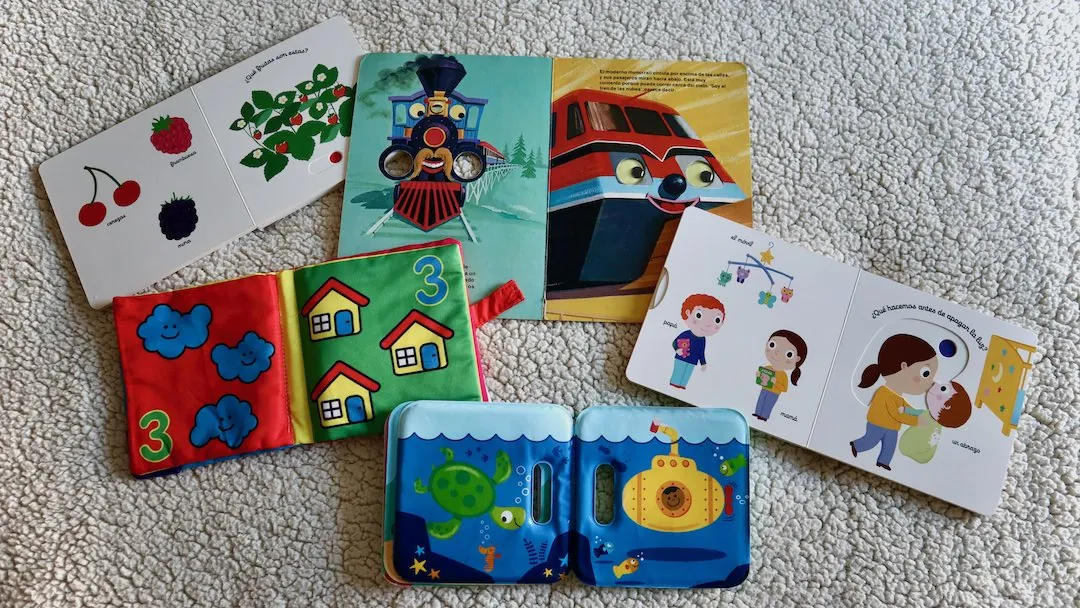
First books
You look at a book with big pictures together while you name what they see, and they start to link books with your voice.
To do with your baby between 4 and 8 months. It works on: hearing, language development and visual focus. You'll need: children's books.
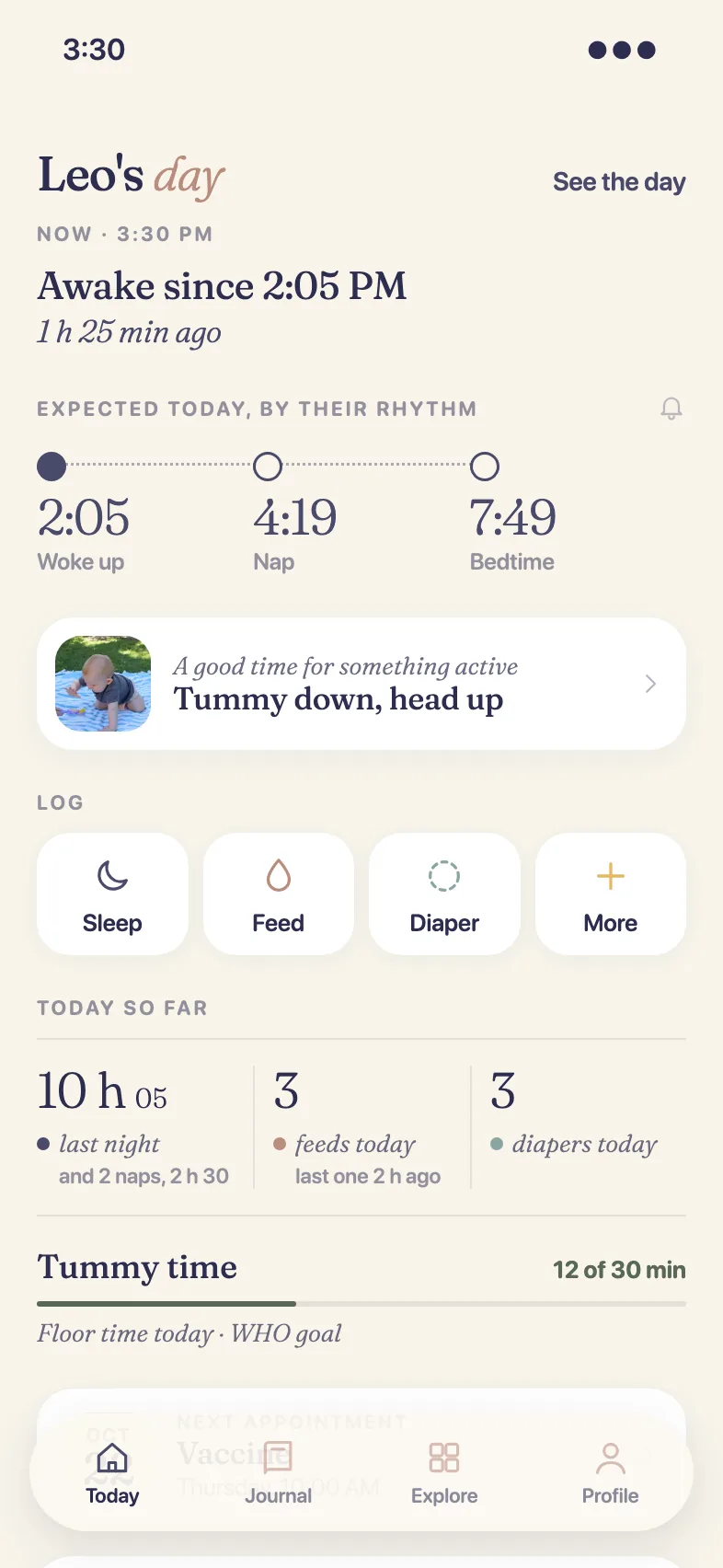
In the app, one activity a day for their age
What do I need?
- Children's books
How do I do it?
Pick the book
Look for cloth, board or plastic baby books that can take drool and chewing. Big pictures, bright colors and little or no text work best.
Point and name
Sit your baby on your lap and open the book in front of you both. Point to each picture and name it: “Look, a cat. Can you see the cat?”
Tell it your way
Use an expressive voice and sing if you feel like it. You don't need to stick to the words in the book.
Let them explore
Give them time to look at each page before you turn it. Let them touch it, bang it or mouth it, because that's how they explore it. When they look away or start to fuss, close the book for today.
Take care
Before you hand it over, check the book has no pieces or bits that could come loose, because it'll end up in their mouth.
What are they learning?
They don't need to understand the story. They hear your voice, look at the pictures while you name them and link books with quiet one-on-one time with you. The more words they hear each day, the more words they get to know.
- Movement
- Hands
- Senses
- Language
- Feelings and connection
- Thinking and play
Hearing
Listens to your voice change as you name things, tell the story or sing
Language development
Hears the name of each picture while you point to it
Visual focus
Keeps their eyes on the big, brightly colored pictures on each page
What the research says
Newborns prefer their mother's voice
DeCasper & Fifer · 1980Responding to babbling helps babies quickly learn speech sounds
Goldstein & Schwade · 2008How visual attention develops in babies
Colombo · 2001
See all 6 references
- DeCasper AJ, Fifer WP. Of human bonding: newborns prefer their mothers' voices. Science. 1980;208(4448):1174-1176. doi:10.1126/science.7375928 doi.org/10.1126/science.7375928
- Muir D, Field J. Newborn infants orient to sounds. Child Development. 1979;50(2):431-436. doi:10.2307/1129419 doi.org/10.2307/1129419
- Goldstein MH, Schwade JA. Social feedback to infants' babbling facilitates rapid phonological learning. Psychological Science. 2008;19(5):515-523. doi:10.1111/j.1467-9280.2008.02117.x doi.org/10.1111/j.1467-9280.2008.02117.x
- Weisleder A, Fernald A. Talking to children matters: early language experience strengthens processing and builds vocabulary. Psychological Science. 2013;24(11):2143-2152. doi:10.1177/0956797613488145 doi.org/10.1177/0956797613488145
- Colombo J. The development of visual attention in infancy. Annual Review of Psychology. 2001;52:337-367. doi:10.1146/annurev.psych.52.1.337 doi.org/10.1146/annurev.psych.52.1.337
- Courage ML, Reynolds GD, Richards JE. Infants' attention to patterned stimuli: developmental change from 3 to 12 months of age. Child Development. 2006;77(3):680-695. doi:10.1111/j.1467-8624.2006.00897.x doi.org/10.1111/j.1467-8624.2006.00897.x
Reviewed by Javier Atance Ibar, PhD in Education