PapaKoala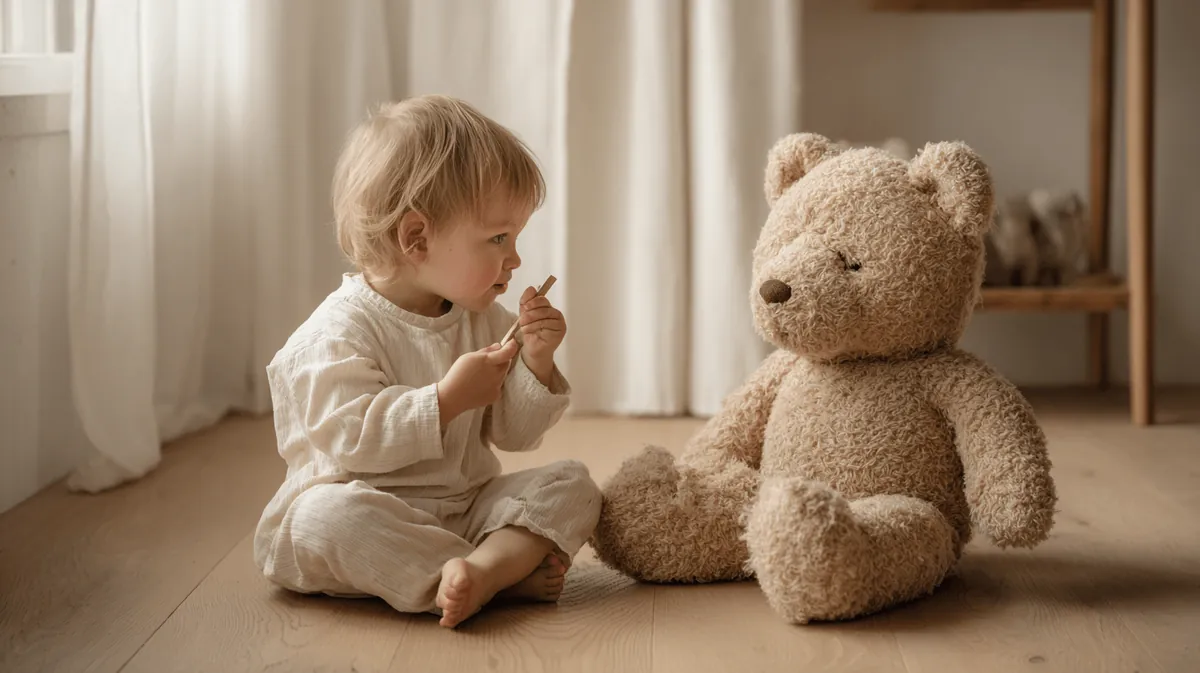
Taking care of teddy
You feed or comb a cuddly toy, then it's their turn, and they discover that others have needs too.
To do with your toddler between 12 and 18 months. It works on: fine motor skills, language development and social awareness. You'll need: spoon, cuddly toys, comb and very small cup.
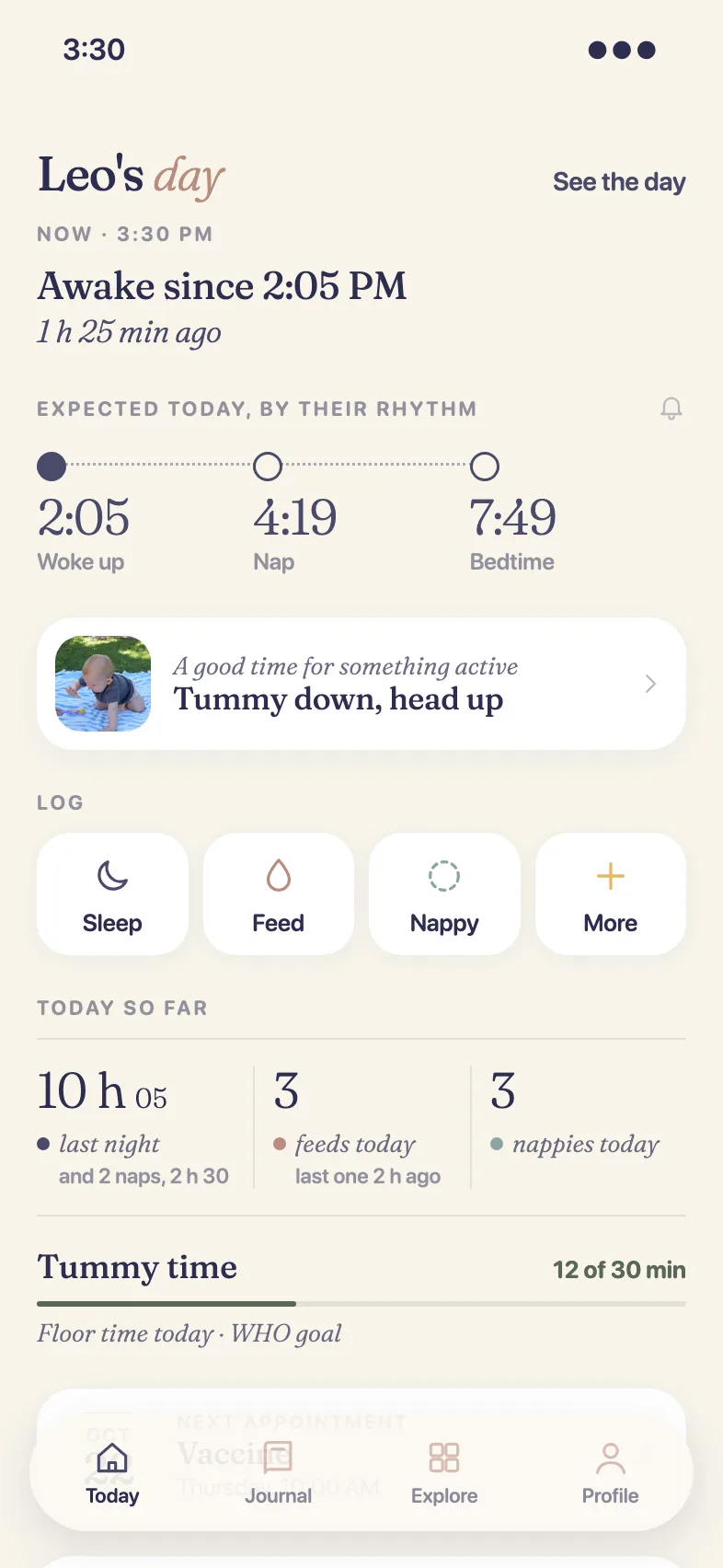
In the app, one activity a day for their age
What do I need?
- Spoon
- Cuddly toys
- Comb
- Very small cup
How do I do it?
Introduce the cuddly toy
Sit with your little one and pick a cuddly toy and something to care for it with: a spoon, a comb or a very small cup. Introduce the toy as someone who needs help: “Look, the bear is hungry.”
Go first
Bring the spoon to the bear's mouth, slowly and where they can see it, with a “Yum, yum!” You can also comb it gently or give it a drink from the cup.
Hand over the spoon
Offer them the spoon: “Now you. Feed the bear.” The challenge is to bring it to the cuddly toy instead of sucking on it or banging with it.
Cheer every try
Let them try it on themselves first: they may comb their hair or put the spoon in their mouth. When they do it with the bear, cheer: “The bear's not hungry any more!” If they lose interest, put the bear away for another time.
What are they learning?
By copying you, they practise steering the spoon or comb towards someone else, not just towards themselves. As you play, they hear action words like eat, drink and comb. Caring for the bear helps them understand that others have needs too, which is where empathy begins.
- Movement
- Hands
- Senses
- Language
- Feelings and connection
- Thinking and play
Fine motor skills
Guides the spoon or comb carefully towards the cuddly toy
Language development
Hears action words like eat or comb and links them to each gesture
Social awareness
Discovers that the bear gets hungry too and takes care of it
What the research says
Motor milestones: what little ones learn to do with hands and body
Gerber et al. · 2010Responding to babbling helps babies quickly learn speech sounds
Goldstein & Schwade · 2008Responding, copying and sharing feelings: where babies' social sense begins
Markova & Legerstee · 2006
See all 6 references
- Gerber RJ, Wilks T, Erdie-Lalena C. Developmental milestones: motor development. Pediatrics in Review. 2010;31(7):267-277. doi:10.1542/pir.31-7-267 doi.org/10.1542/pir.31-7-267
- Rochat P. Object manipulation and exploration in 2- to 5-month-old infants. Developmental Psychology. 1989;25(6):871-884. doi:10.1037/0012-1649.25.6.871 doi.org/10.1037/0012-1649.25.6.871
- Goldstein MH, Schwade JA. Social feedback to infants' babbling facilitates rapid phonological learning. Psychological Science. 2008;19(5):515-523. doi:10.1111/j.1467-9280.2008.02117.x doi.org/10.1111/j.1467-9280.2008.02117.x
- Weisleder A, Fernald A. Talking to children matters: early language experience strengthens processing and builds vocabulary. Psychological Science. 2013;24(11):2143-2152. doi:10.1177/0956797613488145 doi.org/10.1177/0956797613488145
- Markova G, Legerstee M. Contingency, imitation, and affect sharing: Foundations of infants’ social awareness. Developmental psychology. 2006;42(1):132-141
- Amanda Sheffield Morris, Amy C. Williamson. Building Early Social and Emotional Relationships with Infants and Toddlers : Integrating Research and Practice. Vol 1st ed. 2018. Springer; 2019.
Reviewed by Javier Atance Ibar, PhD in Education