PapaKoala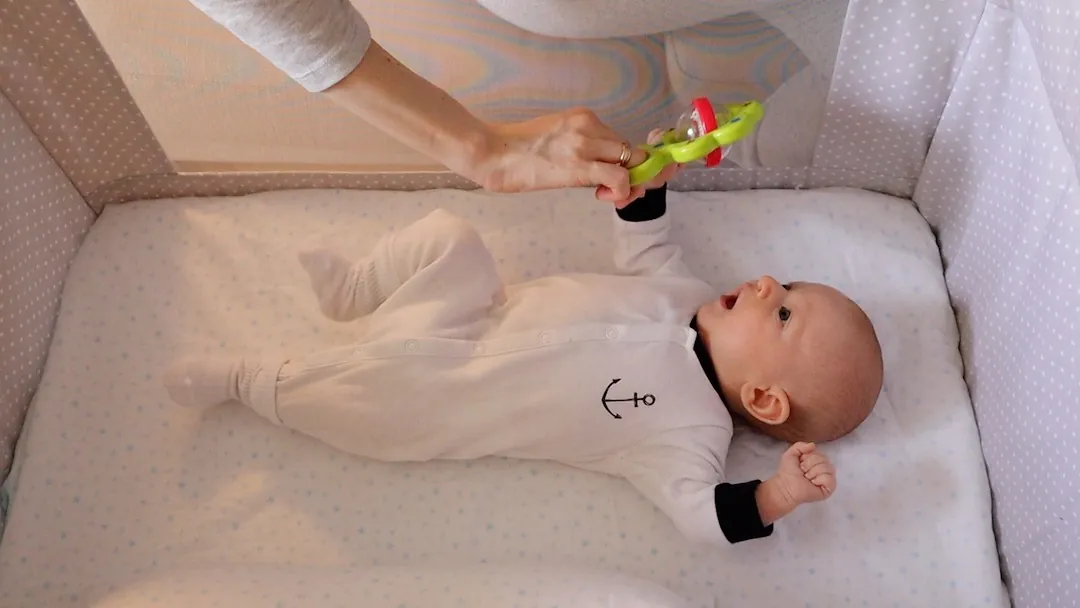
Following the rattle
You move a rattle slowly from side to side as it jingles, and your baby practises following it with their eyes.
To do with your baby in the first 4 months. It works on: hearing, visual movement and visual focus. You'll need: rattle.
In the app, one activity a day for their age
What do I need?
- Rattle
How do I do it?
Set up the space
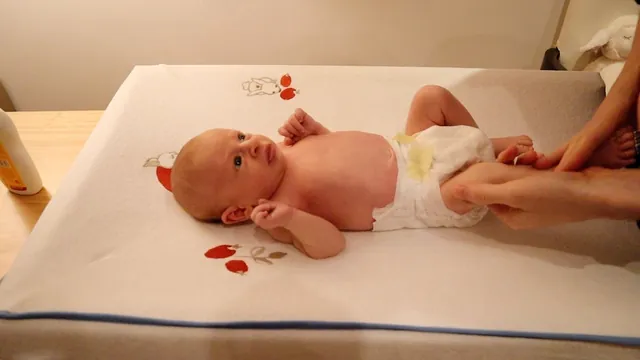
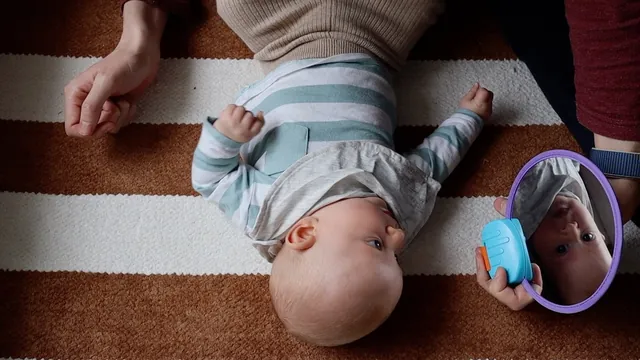
Lay your baby on their back on a comfortable surface. Bring your face about 30 cm from theirs, so they can see you clearly.
Move the rattle
Pick up something that makes a sound (a rattle, a bell or a musical toy). Move it slowly from left to right in front of their eyes, about 20–25 cm from their face.
Add the sound
Keep the sound going as you move it, so they see and hear it at the same time. Watch their eyes: at first they follow it in little jumps, then more and more smoothly.
Stop when they tell you
When they look away or start to fuss, leave it for today. That's their way of telling you they've had enough.
Take care
Keep a firm grip on the rattle the whole time, so it can't slip and fall on their face.
What are they learning?
As they follow the rattle, they practise moving their eyes from side to side without losing sight of it, and the sound helps them connect what they see with what they hear. Around 3 months, many babies start reaching for the rattle, even if they can't grab it yet.
- Movement
- Hands
- Senses
- Language
- Feelings and connection
- Thinking and play
Hearing
Connects the sound of the rattle with what they see
Visual movement
Follows an object moving from side to side with their eyes
Visual focus
Keeps their eyes on the rattle without losing track of it
What the research says
Newborns prefer their mother's voice
DeCasper & Fifer · 1980How human eyesight develops
Braddick & Atkinson · 2011How visual attention develops in babies
Colombo · 2001
See all 6 references
- DeCasper AJ, Fifer WP. Of human bonding: newborns prefer their mothers' voices. Science. 1980;208(4448):1174-1176. doi:10.1126/science.7375928 doi.org/10.1126/science.7375928
- Muir D, Field J. Newborn infants orient to sounds. Child Development. 1979;50(2):431-436. doi:10.2307/1129419 doi.org/10.2307/1129419
- Braddick O, Atkinson J. Development of human visual function. Vision Research. 2011;51(13):1588-1609. doi:10.1016/j.visres.2011.02.018 doi.org/10.1016/j.visres.2011.02.018
- Rosander K. Visual tracking and its relationship to cortical development. Progress in Brain Research. 2007;164:105-122. doi:10.1016/S0079-6123(07)64006-0 doi.org/10.1016/S0079-6123(07)64006-0
- Colombo J. The development of visual attention in infancy. Annual Review of Psychology. 2001;52:337-367. doi:10.1146/annurev.psych.52.1.337 doi.org/10.1146/annurev.psych.52.1.337
- Courage ML, Reynolds GD, Richards JE. Infants' attention to patterned stimuli: developmental change from 3 to 12 months of age. Child Development. 2006;77(3):680-695. doi:10.1111/j.1467-8624.2006.00897.x doi.org/10.1111/j.1467-8624.2006.00897.x
Reviewed by Javier Atance Ibar, PhD in Education